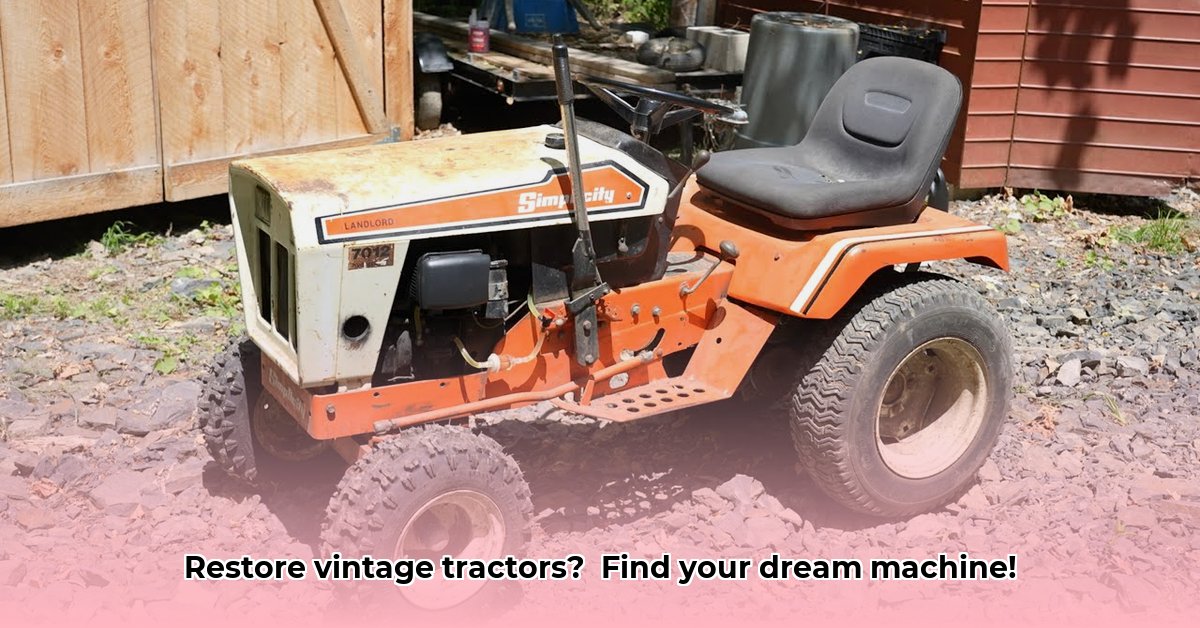
Old Garden Tractors: A Collector's Guide
The world of vintage garden tractors offers a fascinating blend of nostalgia, mechanical ingenuity, and rewarding restoration projects. These aren't just old machines; they're time capsules, representing a simpler era of craftsmanship and backyard ingenuity. But navigating this hobby requires knowledge—from assessing value to executing a successful restoration. This guide provides a comprehensive overview for both seasoned collectors and enthusiastic newcomers. For more on specific brands, check out this Oliver tractor resource.
The Allure of Vintage Garden Tractors
Why the enduring appeal of these old workhorses? It's more than just nostalgia. Many find their charming aesthetics and surprising versatility irresistible. These tractors can handle a variety of tasks—from plowing small gardens to hauling firewood—blending practicality with a unique historical connection. The satisfaction of restoring a neglected machine to its former glory is a powerful motivator, offering a palpable sense of accomplishment. Isn't that sense of achievement a major part of the hobby's charm?
Navigating the Market: Finding Your Perfect Match
The market for vintage garden tractors is surprisingly diverse, with prices ranging dramatically. A neglected project might cost a few hundred dollars, while a meticulously restored, rare model can sell for thousands. Several factors significantly impact a tractor's value:
Brand Recognition: Established brands like Sears Craftsman and Jacques Mighty Mite command higher prices due to their reputation for quality and collector demand. This brand loyalty often translates directly into higher resale value.
Condition: A well-maintained tractor, even a less popular model, will generally sell for more than a neglected one. Original paint, a complete set of parts, and a smoothly running engine significantly increase value.
Completeness: A tractor with all original accessories—plows, tillers, owner's manuals—is highly desirable. These extras significantly add to its historical significance and market value. Original engines are a significant plus for discerning buyers.
Finding your ideal tractor requires patience. Online marketplaces like eBay and Craigslist are good starting points, but don't discount specialized collector forums and groups. These communities are invaluable resources for discovering rare models and sourcing hard-to-find parts. Did you know that online forums often reveal hidden gems not found in typical online marketplaces?
Assessing Your Find: A Pre-Purchase Checklist
Before purchasing, a thorough inspection is crucial. Don't just look; examine. Focus on these key areas:
Engine: Does it start and run reliably? (Knowing the engine type—Briggs & Stratton, Kohler, etc.—is helpful for parts sourcing). A well-maintained engine greatly increases the value and reduces potential repair costs.
Transmission: Does it shift smoothly through all gears? (Understanding the transmission type informs potential repair complexities). Smooth shifting indicates less potential for future repairs.
Hydraulics (if applicable): Test hydraulics thoroughly if present (for lift arms, etc.). Functional hydraulics are a valuable feature and suggest less potential maintenance.
Body Condition: Assess the extent of rust and any significant damage. (Rust is common but often repairable). Assessing the level of rust early on avoids expensive surprises.
Accessories: Note any included attachments. These add value and expand functionality.
Restoration: A Rewarding Journey
Restoring a vintage garden tractor is a labor of love requiring patience, planning, and mechanical skills. However, the rewards are immense. This is a phased approach:
Disassembly: Carefully take the tractor apart, documenting each step with photos or diagrams. Meticulous documentation is vital for successful reassembly.
Cleaning: Thoroughly clean each part. Rust removal (wire brushing, chemical treatments, sandblasting) may be necessary. This stage substantially impacts the final product's quality and appearance.
Repair/Replacement: Address damaged or worn parts. (Sourcing parts is crucial; online forums, specialized vendors, and junkyards are common sources).
Reassembly: Carefully reassemble the tractor using your documentation. Accuracy is crucial here, preventing costly mistakes.
Testing/Fine-Tuning: Thoroughly test all systems and fine-tune as needed. Testing ensures proper functionality and operating efficiency.
The Sweet Rewards (and Risks) of Ownership
The satisfaction of restoring a vintage tractor is undeniable. However, it's essential to consider potential risks:
| Risk Factor | Likelihood | Impact | Mitigation |
|---|---|---|---|
| Overpaying | High | High | Thorough research, comparing prices |
| Parts Sourcing Difficulty | Medium | Medium | Utilizing online forums and specialist parts suppliers |
| Unexpected Repair Costs | High | High | Careful pre-purchase inspection, setting a budget |
| Time Commitment | High | Medium | Creating a realistic schedule, phased approach |
How to Accurately Determine the Value of a Vintage Sears Handyman Garden Tractor
The value of a vintage Sears Handyman tractor varies greatly depending on condition, completeness, and accessories. A neglected tractor might fetch $200, while a meticulously restored example could sell for thousands. Condition is the single most important factor. A functional engine is paramount.
Key Factors:
- Condition: A well-preserved tractor with original paint and minimal wear commands the highest price.
- Completeness: Original parts and attachments, particularly the engine and owner's manuals, significantly increase value.
- Market Research: Compare completed sales prices on online forums and auction sites. Websites like Yesterday's Tractors offer invaluable insights and price guidance. This ensures you get a realistic market evaluation.
Detailed Inspection:
Before buying, check the engine (functionality, leaks, noises), transmission (smooth shifting), tires (condition), sheet metal (rust, dents), accessories, and accompanying documentation (manuals). This ensures you're making an informed purchase based on factual data.
Pricing Ranges:
Expect a wide price range, from a few hundred dollars for a heavily-neglected machine to several thousand for a fully restored, highly desirable model.
The journey of owning and restoring a vintage garden tractor is a rewarding blend of passion, patience, and meticulous craftsmanship. The true reward isn't just the finished machine; it's the journey itself.